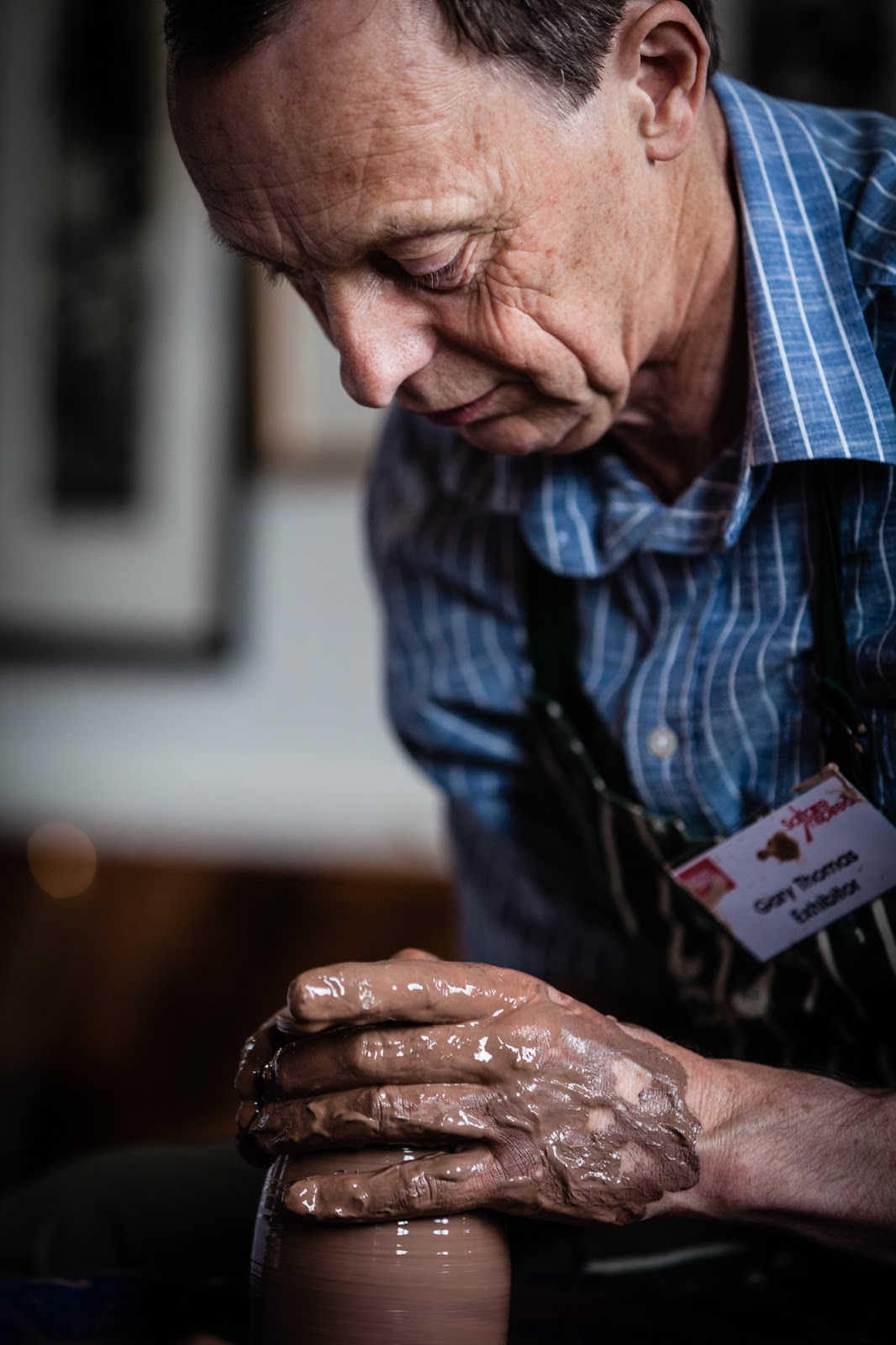
After much experimenting in Lr Cc and Ps Cc I finally decided on the treatment I would give this year's Saltaire Inspired exhibitors images.
In the end I didn't use Ps to process any of the images, it was all done in Lr. I'm finding that increasingly Ps is getting used less and less for post processing as I can do everything I want in Lr CC.
If I need to add text or logos to images then Ps is the only option, and also if i decide the image requires a lot of use of the content aware re-touching, iI find its quicker in Ps.
Here is a selection from the final images, all taken on Canon 5D2 with either a Canon 16-35mm f2.8 L II, 24-70 f2.8 L or 70-200mm f2.8 IS L.
Sunday, 18 June 2017
Saturday, 3 June 2017
Lippy Ladies Project - Hatfield Main Colliery Doncaster
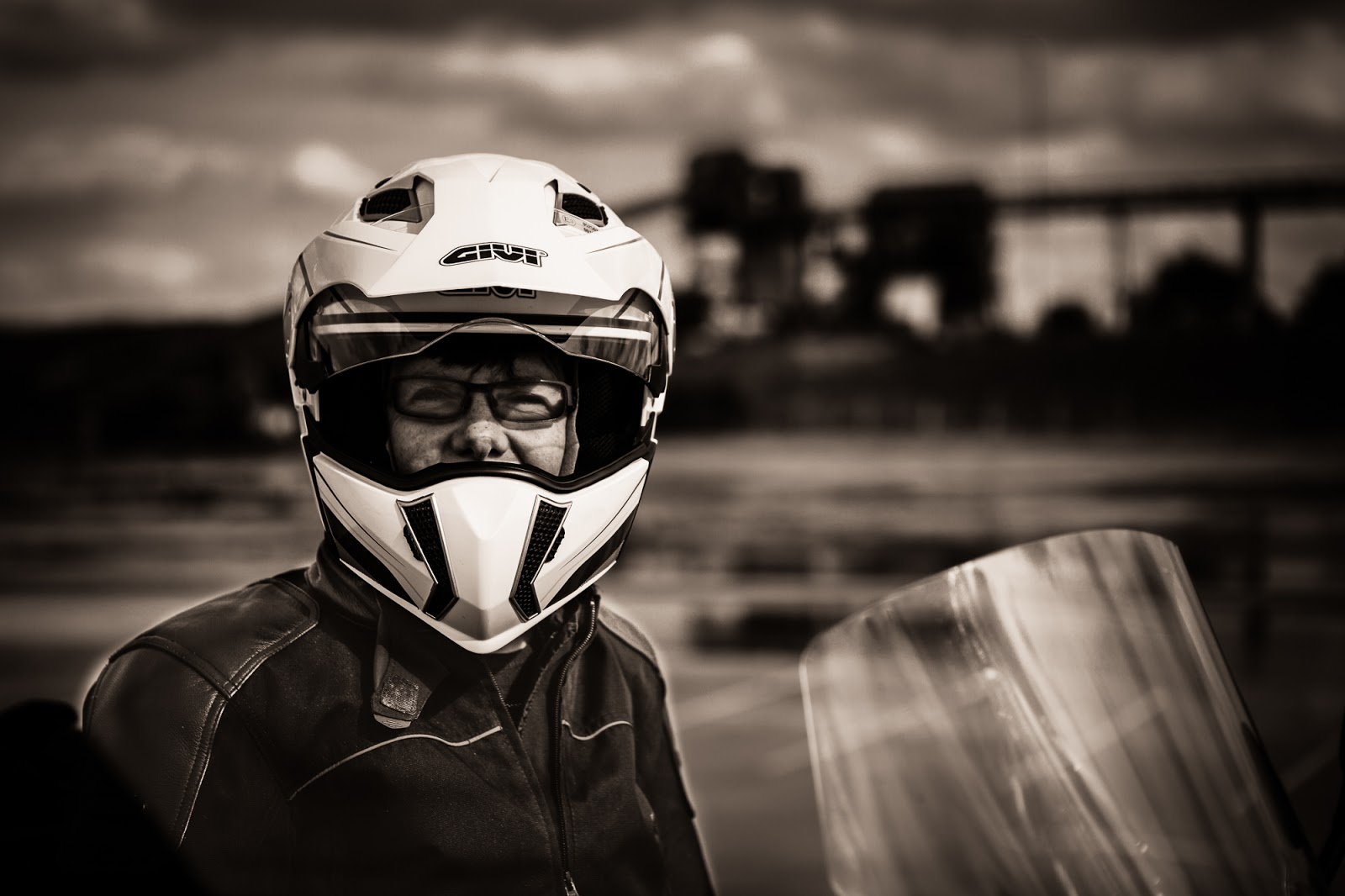
After a hiatus during the winter the Lippy Ladies project has started up again.
I drove over to Hatfield Main Colliery near Doncaster to meet up with Helen.
Helen is originally from a Yorkshire mining village and learned to ride motorcycles on the slag heaps when she was a teenager.
After speaking to security we were allowed onto the site but not permitted to go any closer due the work in progress back filling the 1 mile deep access shaft.
Hatfield colliery opened in 1916 and shut down in June of 2015, unable to sell its coal due to increases in the UK carbon tax. In November 2015 the two headstocks were Grade II listed.
I shot on m Canon 5D2 bodies with the Canon 24-70mm f2.8 USM L, Canon 16-35mm f2.8 USM L II and Canon 70-200 f2.8 USM L IS lenses.
Images processed in Lr CC
Patrick Smith studio Canon G10 Powershot
Its Yorkshire Open Studios this week and we were round at our old friend Patrick Smiths studio for a catch up and a look at some of his work, old and new.
Patrick has a nice studio/workshop in a separate building in his garden and like I do with all artists I took some photos of it.
The only camera I had with me was my trusty Canon G10 Powershot.
I've given the images a little tweak in Lr CC
Patrick has a nice studio/workshop in a separate building in his garden and like I do with all artists I took some photos of it.
The only camera I had with me was my trusty Canon G10 Powershot.
I've given the images a little tweak in Lr CC
![]() |
Monday, 29 May 2017
Saltaire Inspired 2017 - Canon 5D2 16-35 f2.8 L and 70 -200 f2.8 L IS
I was back at Saltaire Inspired this weekend to shoot portraits of the artists as I did last year.
Last time I shot one day with my Canon 5D2 and the other with my Fuji X-Pro1.
Since then the Fuji has gone, replaced by another 5D2 body, a Canon 70 - 200 f2.8 L IS and a Canon 16 - 35 f2.8. Why? well I've blogged about that previously, but it was because the Fuji was just too slow to use.
This was my first proper shoot with the 16-35 f2.8 L, and I thought it might be useful in the very small rooms in which artist exhibit at Saltaire Inspired. On line there is a huge amount of debate about which is best the Canon 16-35mm f2.8 or the f4 version. The argument being that as the f4 version has IS then the speed of the f2.8 is not necessary. Possibly not if you shoot landscapes it might be worth saving some money. However I need my lenses to do more that only one type of photography and the extra control over DoF that the f2.8 gives is worth it for me. I have the V2 version of the 16-35 and its an absolute beauty.
So, back to Saltaire Inspired 2017. I decided that I'd not use my default BW treatment this year and try something different. These images are not necessarily the finish treatment, it my change dramatically, but so far I like the results.
Wednesday, 10 May 2017
Scaffolders with Olympus PEN E1 and Zuiko 40 - 150mm
The scaffolders arrived this morning at 8am to erect the scaffold that will be used by the roofers for the new roof we're having.
I was sitting having my morning coffee and noticed these great silhouettes of the scaffolders working against the blinds of the window.
I grabbed the nearest camera which happened to by the Olympus PEN E-1 with the Zuiko 40 - 150mm lens, the camera was set to the "Grainy Film" Art preset so I quickly snapped some images as they worked.
Cropped for consistency in Lr CC., otherwise as they come out of the camera with that particular preset.
Saturday, 29 April 2017
Olympus PEN E-1 with Zuiko 40 - 150mm
I've had an Olympus PEN E-1 since it came out. I quite liked the idea of a compact mirrorless camera with a large(ish) sensor, and I already had an Olympus E330 so could use the glass with a MFT adapter. Even though I eventually went to Full-Frame 35mm with a Canon 5D2 I kept the PEN and the 14 - 42mm and 40 - 150mm lenses.
It went with my daughter to uni, then to the U.S. and eventually made its way home via a 10 month stay in China.
Since then is done a bit of Ebay photography duty but pretty much stayed in its camera bag. Until recently when I was sorting through stuff and came upon it, I started playing with it and remembered all the things I had liked about it.
OK, so things get a bit noisy above 400 ISO but I really liked the Art mode preset Grainy Film so it didn't really matter. I've been using it for portraits.
These are jpg sooc with just resizing in Lr CC
![]() |
| Olympus PEN E-1 Zuiko 40-150mm |
![]() |
| Olympus PEN E-1 Zuiko 40-150mm |
Thursday, 27 April 2017
Tascam DR-40 Linear PCM recorder
A slight departure from photography for this entry.
My main occupation is video production, I shoot with dedicated HD and 4K video cameras and have never embraced the DSLR video revolution. I have shot video with DSLR using my Canon 5D2 and the results were very good. However I found the workflow rather slow when compared to using dedicated video cameras.
The main problem was with audio, I shoot a lot of interviews and having XLR inputs on the cameras able to take the wireless microphone transmitter and record top quality audio together with the video greatly simplifies the workflow during ingestion and editing.
When I shot with a DSLR I recorded the mics onto a borrowed Zoom H4n and synchronised the audio and video files in Final Cut Pro X. Additionally setting all this up, often lighting as well, and then monitoring two pieces of equipment while recording and directing is a lot to deal with when I'm usually a single shooter. Add to this time constraints often present with these shoots and it has meant I have opted for the simplest solution that gets the job done.
I really like the look of DSLR video though, and the shallow DoF available looks good, especially for interviews.
I was idly browsing the internet recently and up came an article about DSLR video where the audio had been recorded on a Tascam DR-40 recorder. It looked very much like a clone of the ever popular Zoom H4n much cheaper. I investigated further and the reviews were very positive. The DR-40 lacked some of the features of the H4n (mainly effects and the ability to be used as a USB audio interface) but these were features I'd not use, effects I'd add in post and I already have several USB audio interfaces.
Tascam is a name I trust and respect in audio, I used their open reel recorders extensively back in the 80's and 90's and they were superb. I was tempted; then I saw the deal clincher, Bax Music were offering the DR-40 for £136, a good price, then on their website there was an offer of an additional 20% off ending that day, free postage as well. I pushed the button. After VAT has been claimed back it came to a bargain price of £101!
The DR-40 arrived 3 days later from Holland. I unpacked it, installed the batteries and went to record a concert that evening.
I set the DR-40 up in front of the small vocal ensemble, set the levels and pressed record. The result was a very accurate recording of the event.
The following day I updated the firmware and tried the DR-40 out in 4 channel mode with a couple of Oktava P48 mics, which worked well. I also tested the safety record option whereby a second recording is made at a level -6dB to -12dB lower than the main one, This is a really useful feature, especially in situations when you don't have 100% control over the levels.
Compared the the Zoom H4n the construction uses more plastic, it lacks effects section and the USB interface as I've already mentioned. Sound quality is pretty much identical, and I strongly suspect it shares a chipset with the Zoom and other similar devices.
The Tascam does have a few features not on the Zoom, the mics can be switched from X-Y to A-B as opposed the the 90 or 120 degree option on the Zoom. There is also a nifty rubber foot in the Tascam battery compartment that isolates and raises the device when placed on a flat surface such as a table.
Another feature, which brings me back to where I started this entry, is that when the audio output of the DR-40 is connected to the input of your DSLR the DR-40 can be set to generate a tone at the start of each recording for easy sync in the edit. I also find the menu system easier to navigate than the Zoom menu.
So, I'm now hoping to use a couple of DSLR, with lovely Canon L glass and the DR-40 on an upcoming project. I'll post here on how that goes.
Subscribe to:
Posts (Atom)